

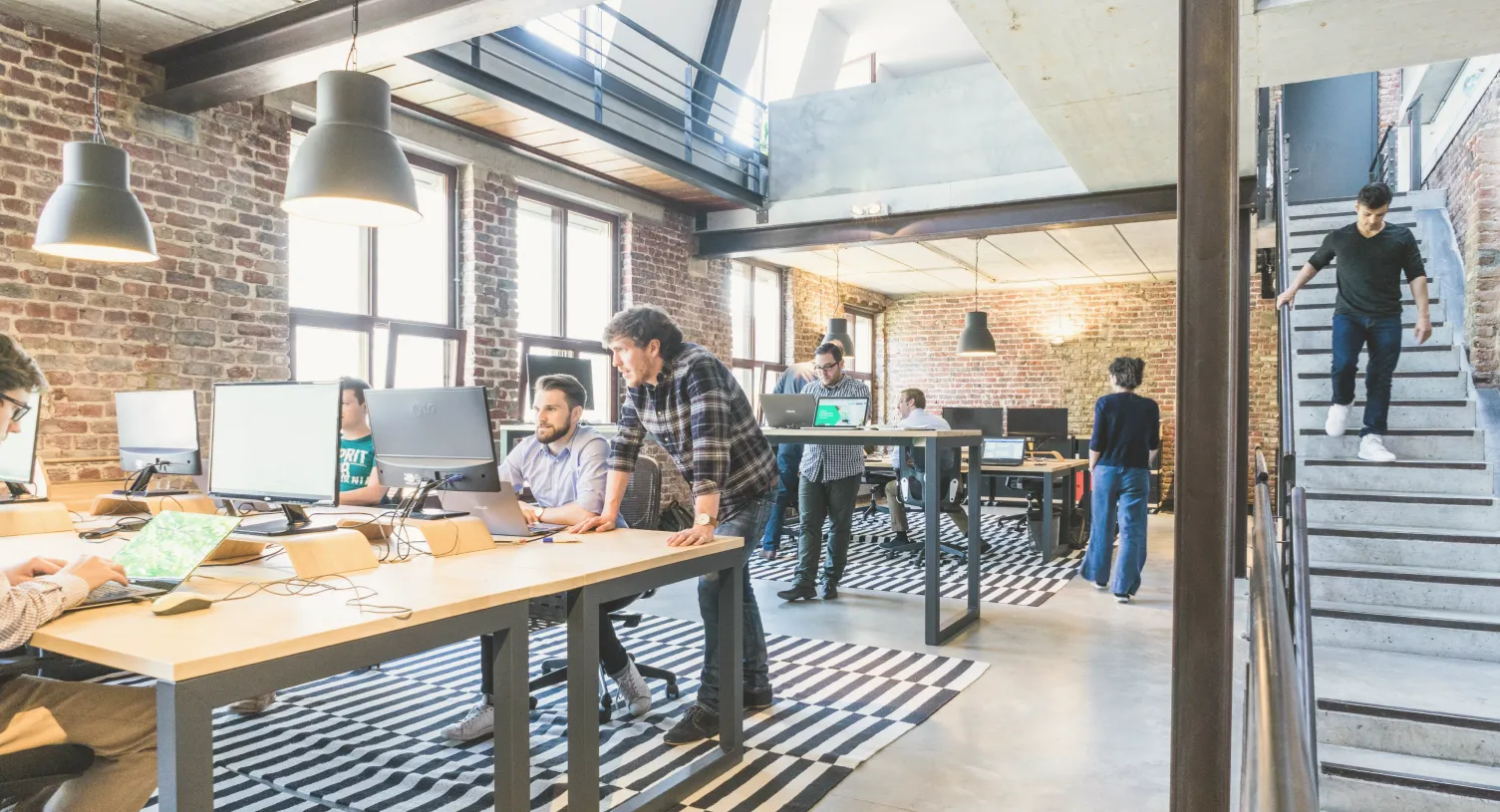
Most HR Operations leaders inherited a workplace tech stack built through acquisition, not architecture. A visitor management tool purchased in 2019. A room booking system bolted on in 2021. A desk reservation app added during return-to-office. Each solved a discrete problem. Together, they created a fragmented employee experience that kills adoption and burns IT budget on integration maintenance.
Research from Quickbase found that 90% of employees feel overwhelmed by the number of software solutions they use daily.
2026 accelerates the consolidation trend that began in 2023, but with two critical differences that redefine what "workplace technology" means.
Workplace technology purchasing decisions historically prioritized back-office requirements: compliance tracking, utilization reporting, visitor logs. The employee interface was an afterthought, something employees were required to use, not something they wanted to use.
That calculus has reversed. In a 2025 survey by Gartner of over 1,400 HR leaders, improving the employee experience was the most frequently cited goal for organizational culture (64%) and a top-three priority for leadership development (50%).
HR Operations leaders now evaluate workplace tech the same way they evaluate consumer apps: Does this feel like productivity software or compliance software? Will employees adopt it voluntarily, or will we need enforcement policies?
Legacy platforms like Envoy and Robin were architected for facilities management first. Their employee-facing interfaces feel like micromanagement tools; clock-in systems dressed up as "experience platforms." Employees sense the difference immediately.
Modern workplace platforms reverse the architecture: build for the employee experience first, then layer administrative controls on top. When desk booking feels as frictionless as ordering lunch, adoption doesn't require enforcement policies.
Every workplace software vendor added "AI-powered" to their website in 2024. Most delivered glorified chatbots that couldn't book a conference room without three clarifying questions.
2026 separates the pilots from production deployments. Conversational AI like Tessa AI now handles the operational workload that previously required dedicated staff: automated scheduling where "Book me a desk near the design team on Tuesday" becomes a one-sentence request, proactive conflict resolution that detects double-bookings before employees encounter broken experiences, and natural language workplace queries that get instant answers without forcing employees to navigate multiple systems.
The ROI isn't theoretical. AI reduces administrative burden on HR Operations and IT teams while simultaneously improving employee experience; the rare technology upgrade that delivers value on both sides of the equation.
The fragmented approach, separate vendors for visitor management, room booking, desk reservation, and building access, fails on two critical dimensions.
Feature seams destroy adoption: Every vendor handoff creates friction. Different login credentials. Inconsistent mobile experiences. Conflicting calendars. Employees encounter these seams dozens of times per week, and each friction point reduces voluntary adoption.
Integration debt compounds annually: Point solutions require constant API maintenance as each vendor ships updates independently. IT teams spend more time troubleshooting integrations than deploying new capabilities.
Research done by BetterCloud found that 60% of IT teams report having too much manual work that prevents them from taking on strategic projects. A unified platform eliminates feature seams by design. One authentication system. One mobile app. One source of truth for space utilization analytics.
Legacy workplace platforms were built from the facilities management perspective outward. Modern platforms reverse the architecture by designing the employee interface first, using conversational AI as the primary interface so employees never need to learn your software's information architecture, and building invisible compliance where booking rules and capacity limits enforce themselves without creating bureaucratic hurdles.
Workplace AI in 2026 isn't about flashy demos. It's about eliminating operational tasks that don't require human judgment. AI learns patterns and proactively adjusts desk availability, detects when conference room equipment failures correlate with usage patterns and triggers facilities tickets before employees report problems, and analyzes utilization data to suggest lease optimization opportunities.
This isn't theoretical. Tessa AI handles these workloads in production today, delivering measurable reductions in IT service desk volume and facilities management overhead.
Vendors selling single-function workplace tools face an unsolvable architectural problem: you cannot retrofit a people-first experience onto compliance-first software.
Point solutions were built to solve a specific facilities management problem like tracking visitors, managing conference rooms, or loggin desk usage. The employee experience was never the primary design constraint, and bolting on a better mobile interface doesn't change the underlying architecture.
Employees recognize the difference immediately. Software built for compliance feels like compliance. Software built for employee productivity feels like a tool they choose to use.
Workplace technology ROI in 2026 comes from three sources: real estate optimization through accurate space utilization data that enables lease optimization, operational efficiency from conversational AI and automated workflows that reduce IT service desk volume, and employee productivity gains when frictionless workplace experiences eliminate daily micro-frustrations.
Legacy point solutions optimize for purchase price. Modern unified platforms optimize for total cost of ownership and measurable business outcomes.
When assessing workplace platforms, apply three filters: employee adoption rate (request active users as a percentage of eligible employees, not total seats purchased because adoption rates below 60% indicate an employee experience problem), platform architecture (ask whether the system was built as a unified platform or assembled through acquisitions), and AI production deployment (distinguish between marketing claims and production workloads by requesting specific automation metrics).
The vendors who can't answer these questions aren't ready for 2026.
See your workplace in Tactic: Schedule a custom demo to explore your floor plans, space utilization analytics, and AI-driven automation opportunities specific to your real estate portfolio. → Request a demo

A workplace experience platform that brings your hybrid team together.