
.webp)
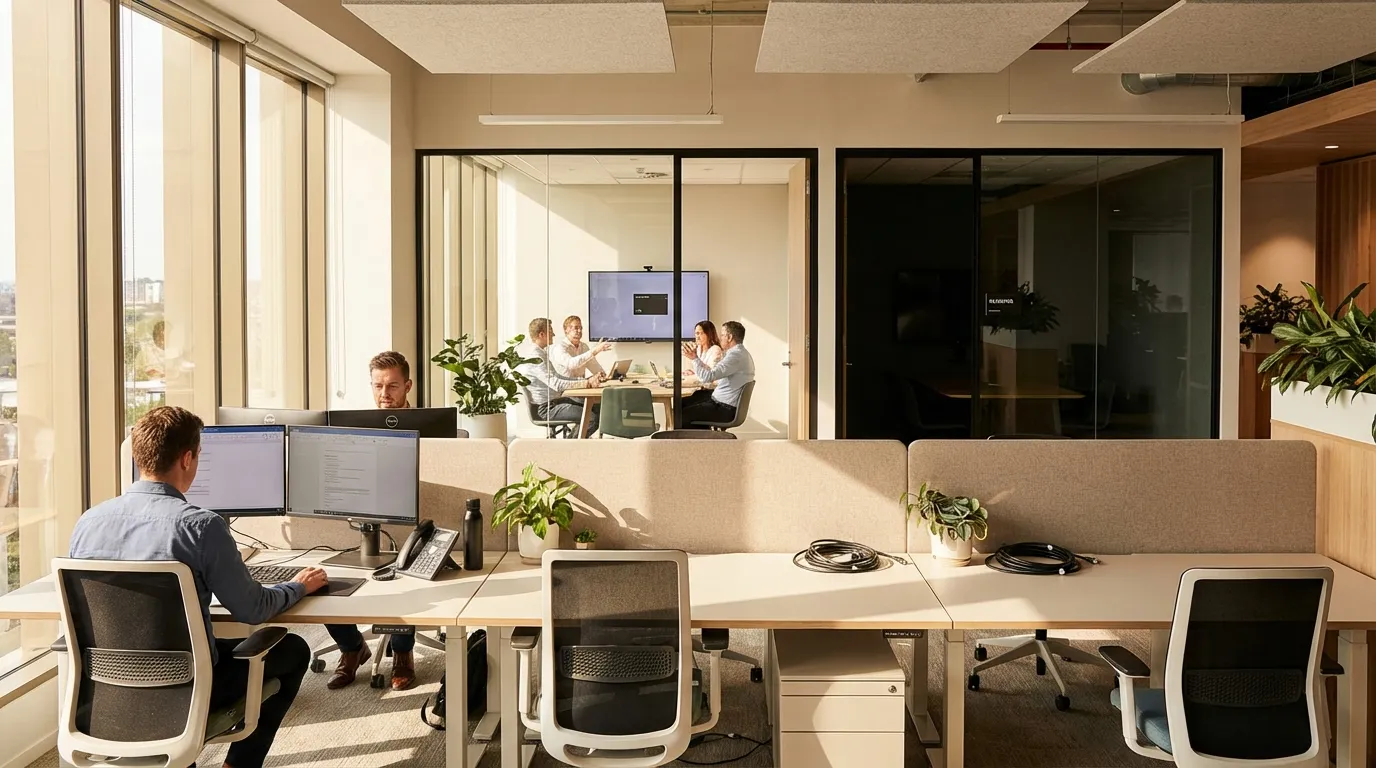
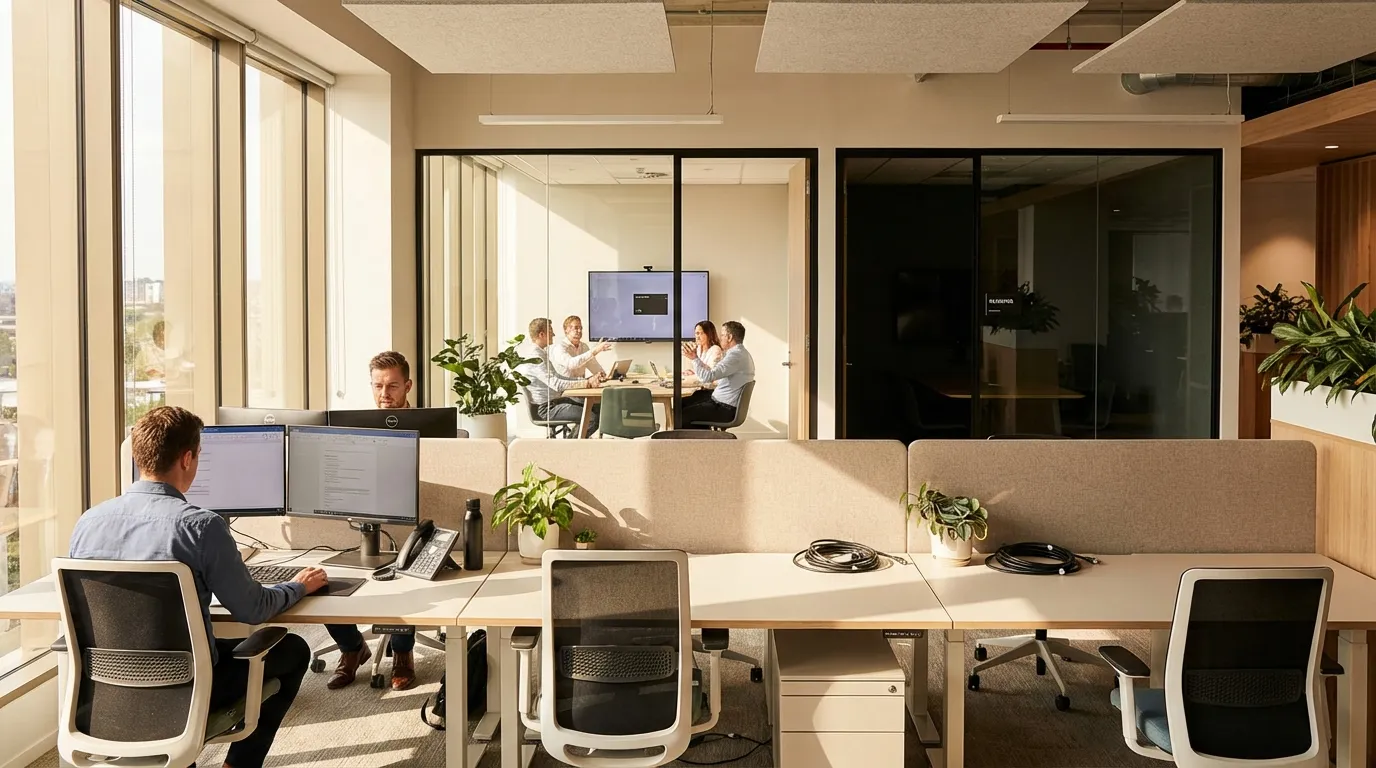
Here's a frustrating reality many workplace ops teams live with: you pull your space utilization report and the numbers look fine. Desk occupancy at 60%, rooms mostly booked. Leadership is satisfied. But walk the floor on a Tuesday afternoon and half those "occupied" desks are empty, and two meeting rooms with green lights outside are sitting dark because someone booked them at 9 AM and never showed up.
The data says one thing. Reality says another. That gap is expensive.
According to Worklytics, the booking-to-occupancy ratio for meeting rooms dropped from 0.85 in 2023 to just 0.71 in 2025 — meaning nearly 30% of booked rooms are sitting empty. A Gartner study found that up to 30% of all meeting room bookings are ghost meetings. And those inflated numbers don't just make reports look pretty. They drive real estate decisions, headcount planning, and floor redesigns — often in the wrong direction.
The root cause isn't your sensors or your floor plan. It's adoption. When employees don't consistently use your desk and room booking system, you lose the signal entirely. Here's how to fix it.
It's easy to think of booking tools as a convenience feature for employees. They're actually the primary data-collection layer for your space analytics. Every check-in, cancellation, and booking pattern feeds the reporting that drives real estate decisions.
Low adoption breaks that loop in two ways. First, you get "ghost" activity — bookings that represent intent, not presence. Employees who book "just in case" and then work from home create phantom demand. Facilities teams see high booking rates and assume the office is humming, when it isn't.
Second, you get invisible occupancy. Employees who show up but don't book are physically present in the office but absent from your data. That's sometimes called "pirate" occupancy — real people using real space that your system doesn't know about. Both failure modes together can make your utilization numbers drift 20-30% away from reality.
The biggest lever on adoption isn't training or policy — it's friction. If booking a desk or a meeting room takes more than 30 seconds, most people won't do it consistently, especially on days they're rushing into the office.
Platforms that integrate directly into the tools employees already live in — Slack, Microsoft Teams, Google Calendar, Outlook — see significantly higher adoption rates than standalone apps. When someone can book a desk from a Slack command or reserve a room from within their calendar invite without switching contexts, booking starts feeling like a natural part of their workflow rather than an administrative chore.
Tactic is built around this idea. Booking flows are embedded in Outlook, Teams, and Slack so employees don't have to open a separate app to plan their day. The AI assistant Tessa lets employees book desks and rooms through natural language — type what you need, it handles the rest. That kind of zero-friction experience is what moves booking rates from 40% to 80%+.
The payoff isn't just a better employee experience. It's cleaner data. More bookings from more people means your utilization reports actually reflect what's happening on the floor.
Even high booking rates won't give you accurate data if employees book rooms and then don't show up. That's where automated check-in logic becomes essential.
The mechanic is straightforward: if no one checks in to a booked room within a set window (typically 10-15 minutes after the meeting start), the system releases the space and marks it as unused. This does two things simultaneously — it frees up rooms for people who actually need them, and it keeps your occupancy data honest.
Without this logic, a room booked from 10 AM to noon that went unused all morning still logs as "occupied" in your system. Multiply that across dozens of rooms and hundreds of bookings per week, and your utilization figures are systematically overstated. Tactic's automated check-in logic addresses exactly this problem, releasing rooms when meetings are cancelled or not confirmed, so the data you're collecting actually maps to reality.
Skedda reports that room booking software with no-show reduction features can cut empty-room incidents by 20-30% on average. That's not just recovered space — it's recovered data integrity.
One underrated driver of desk booking adoption is social context. People are far more motivated to book a desk when they can see that their teammates are coming in the same day. "Who else will be there?" is a more compelling reason to use the booking system than any compliance nudge.
Features like team neighborhoods, colleague visibility, and in-office attendance maps turn the booking tool into something genuinely useful to the employee, not just to the facilities team. When people open the app to see where their team is sitting and book nearby, adoption happens organically.
This also dramatically improves the quality of your utilization data. Attendance driven by visible team coordination tends to be more consistent and more accurately logged than attendance driven by individual whim. You get data that reflects real behavioral patterns — which departments come in on which days, how density shifts across the week — rather than random noise.
Most workplace teams track utilization metrics. Fewer track the adoption metrics that feed them.
Booking adoption rate (what percentage of in-office employees actually made a booking), check-in rate (what percentage of bookings were confirmed), and release rate (how often rooms and desks are returned early) are the upstream numbers that determine whether your utilization data is trustworthy at all. If your booking adoption rate is 45%, your utilization numbers have a ceiling on their accuracy — full stop.
Building a dashboard that tracks both booking behavior and space utilization together lets you spot the gap early. If booking rates are dropping while badge swipe data stays flat, that's a sign people are coming in but not logging their presence. You can then investigate and fix the friction causing that disconnect before it permanently skews your reporting.
According to MySeat data, average workspace utilization in hybrid offices sits around 51-60%, with significant peaks mid-week and near-empty Fridays. For facilities teams trying to rightsize their portfolio, that variation only becomes actionable if the data capturing it is reliable. Getting booking adoption right is what makes the rest of the analytics worth trusting.
Office utilization data is only as good as the behavior that creates it. Ghost bookings, invisible occupancy, and inconsistent check-ins aren't just operational annoyances — they actively mislead the decisions that matter most: how much space you need, how it should be configured, and where you're wasting money.
Fix the adoption problem and the data problem largely fixes itself. That means removing friction from the booking experience, automating check-in logic to eliminate ghosts, making social context visible so employees have a personal reason to book, and tracking adoption metrics as a first-class signal in your reporting.
When the booking system feels like a tool that works for employees — not a compliance requirement imposed on them — they use it. And when they use it consistently, you finally get the utilization data you can actually build a workplace strategy on.

A workplace experience platform that brings your hybrid team together.