


Both Tactic and Kadence are legitimate workplace management platforms that can help you reduce your real estate footprint. Both can justify transitioning to a 0.6:1 desk-to-employee ratio. Both deliver the occupancy analytics your CFO needs to renegotiate lease terms.
The difference isn't about better or worse; it's about scope.
Kadence does what it's designed to do exceptionally well: provide the data and tools for space optimization. Tactic does that and adds a layer focused on making employees actually want to use that optimized space.
Your platform choice depends on your goals. If space utilization dashboards solve your problem, Kadence is a smart, focused solution. If you're also thinking about attendance trends and long-term workplace engagement, Tactic's broader approach may be worth exploring.
Kadence was designed to answer the CFO's question: "How do we cut our lease costs in half?" It does this well with:
Kadence's focused approach means the platform does desk booking and space analytics really well. For many companies, that's exactly what they need.
Tactic delivers the same financial outcomes, desk booking, occupancy analytics, real estate ROI modeling, but adds tools focused on understanding why people come to the office, not just whether they do.
A study by Microsoft found that 84% of employees say they would be motivated to go to the office specifically by the promise of socializing with co-workers.
Tactic has seeing this to be true as companies using Tactic see a 78% increase in office attendance within the first 30 days, which means your optimized footprint actually gets used, your cost-per-occupied-desk drops, and your space efficiency improves beyond the initial downsizing alone.
Both platforms help you shrink your footprint. The question is what happens next.
You can execute a downsizing strategy with either platform. But sustaining that optimized space requires understanding employee behavior, and that's where the platforms diverge.
The typical downsizing playbook:
Many companies then discover that six months later, attendance has dropped further because the "optimized" office feels empty. According to Cushman & Wakefield's Experience Per Square Foot Report, 64% of companies that reduced their office footprint by 30% or more reported lower employee satisfaction within the first year, citing "lack of energy" and "ghost town effect" as primary concerns. The space savings are real, but the value of the remaining space has diminished.
This isn't a Kadence problem; it's an industry-wide challenge. Any desk booking platform can tell you how much space you need. The harder question is making sure people actually want to use that space.
Kadence's focused approach is a strength for companies that know exactly what they need and don't want extra features.
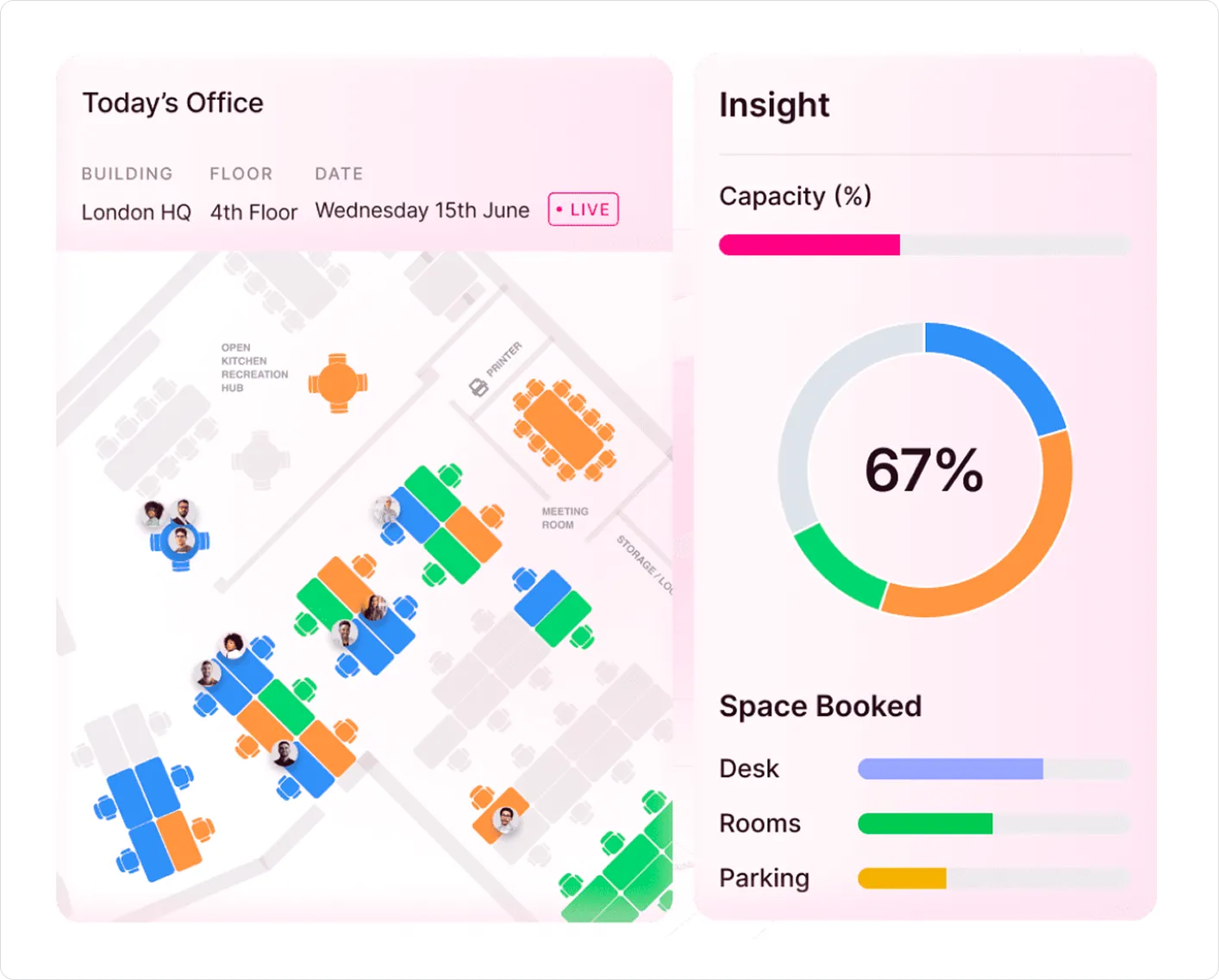
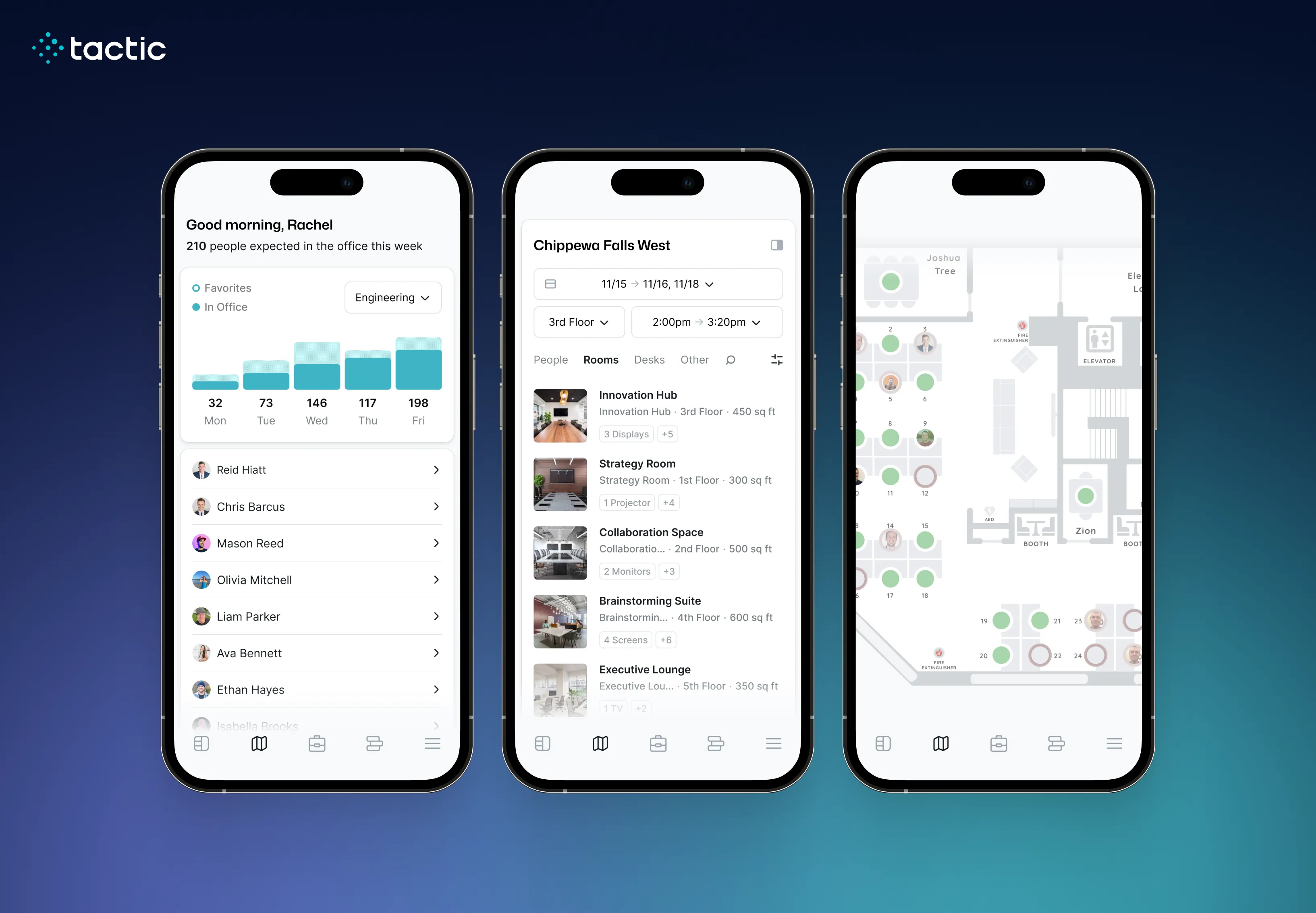
Here's a concrete example of why the comprehensive approach matters:
Scenario A (space metrics only):
Scenario B (Tactic's approach):
Same footprint. Same lease savings. But dramatically better space efficiency because people actually use the optimized space.
Kadence is a good platform. It does desk booking and space analytics well, and for many companies, that's sufficient.
Tactic does those same things and goes deeper by focusing on the people and helping you understand not just how much space you need, but how to make that space actually deliver value.
Neither approach is wrong. Your choice depends on whether space metrics alone meet your needs, or if you want those metrics plus the tools to drive the sustainable attendance that makes your optimized real estate worth keeping.
Book a custom demo to explore:

A workplace experience platform that brings your hybrid team together.