Tactic vs OfficeRnD Workplace
Connected workplace managementUpdated October 2026

Tactic vs OfficeRnD Workplace.
Make room for your people and the work behind them.

Shortlist Tactic: booking inside familiar employee tools needs to connect with room services, requests, seating changes and one live workplace map.

Shortlist OfficeRnD Workplace: its Teams-centered resource booking and connected workplace services fit the program. Both products use resource-based pricing, so that model alone does not distinguish them.

When to stay: If OfficeRnD Workplace already meets your Teams and operational requirements, compare a material workflow difference and the complete annual package before moving.

Maintained by Tactic · Reviewed October 15, 2026 · documentation-based, not a firsthand competitor test. Sources and method →

One connected workplace
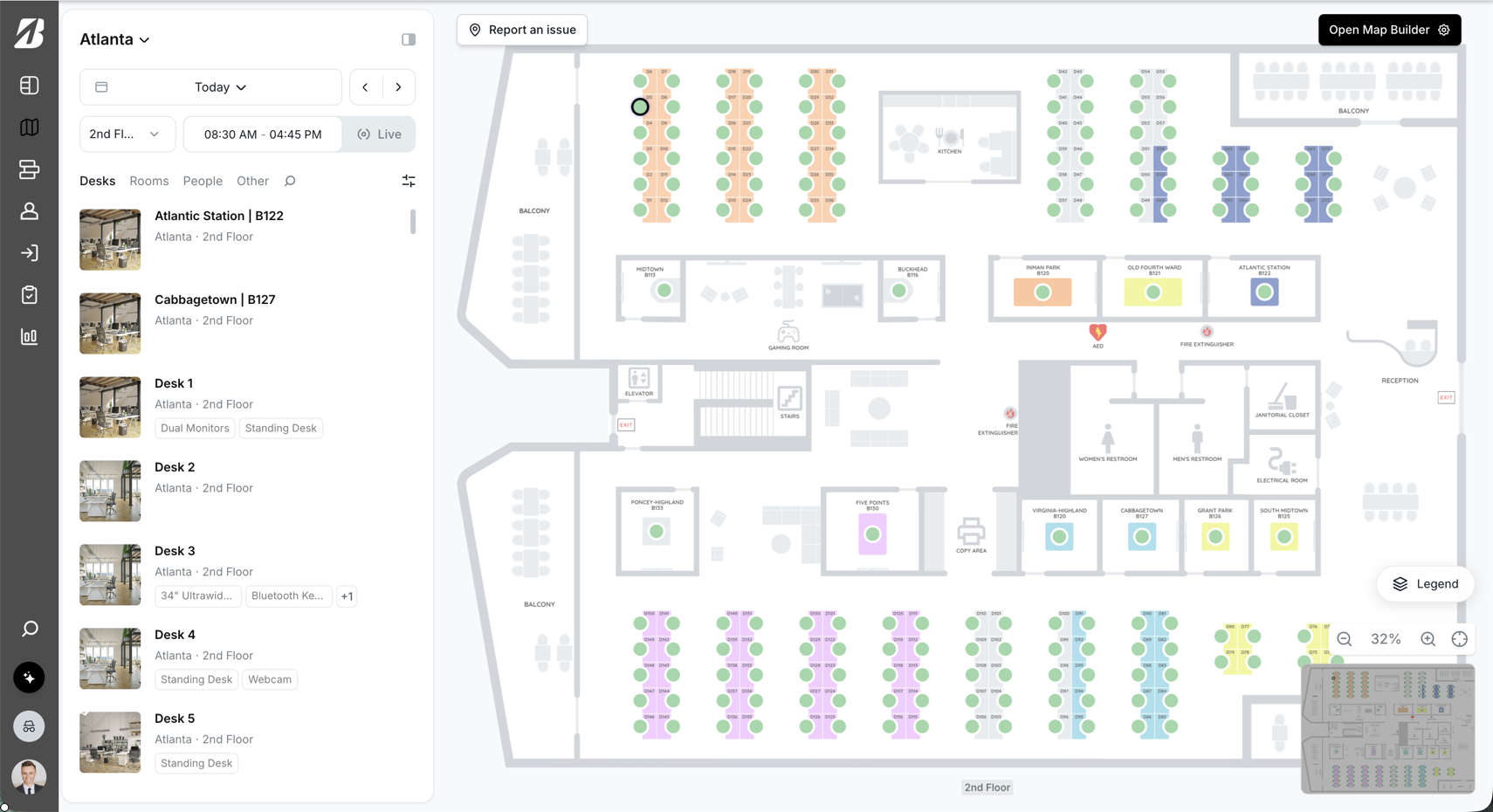
Tactic live workplace map
Built for daily adoptionBooking · maps · workplace operations

Trusted by fast growing companies

A&EVeeamHPECometVertivRE/MAXSmartSweetsNorthwestern University
Why Tactic

A connected workplace, in practice.

Use the same resource inventory, employee count, and integration requirements. Test a team booking, a service request, and a workplace change before choosing.

Interactive maps
Atlanta · 2nd floor8 teammates in
Focus rooms
AMJRKL
Desk B214 · Available

Make everyday booking more visual

Let employees see the workplace, find teammates, and reserve the right desk or room.

Service workflows
Workplace serviceLive queue

24Monitor armDesk C118 · AssignedToday

23Room temperatureAtlas · In progress42m

22New starter setupPeople Ops · PlannedFri

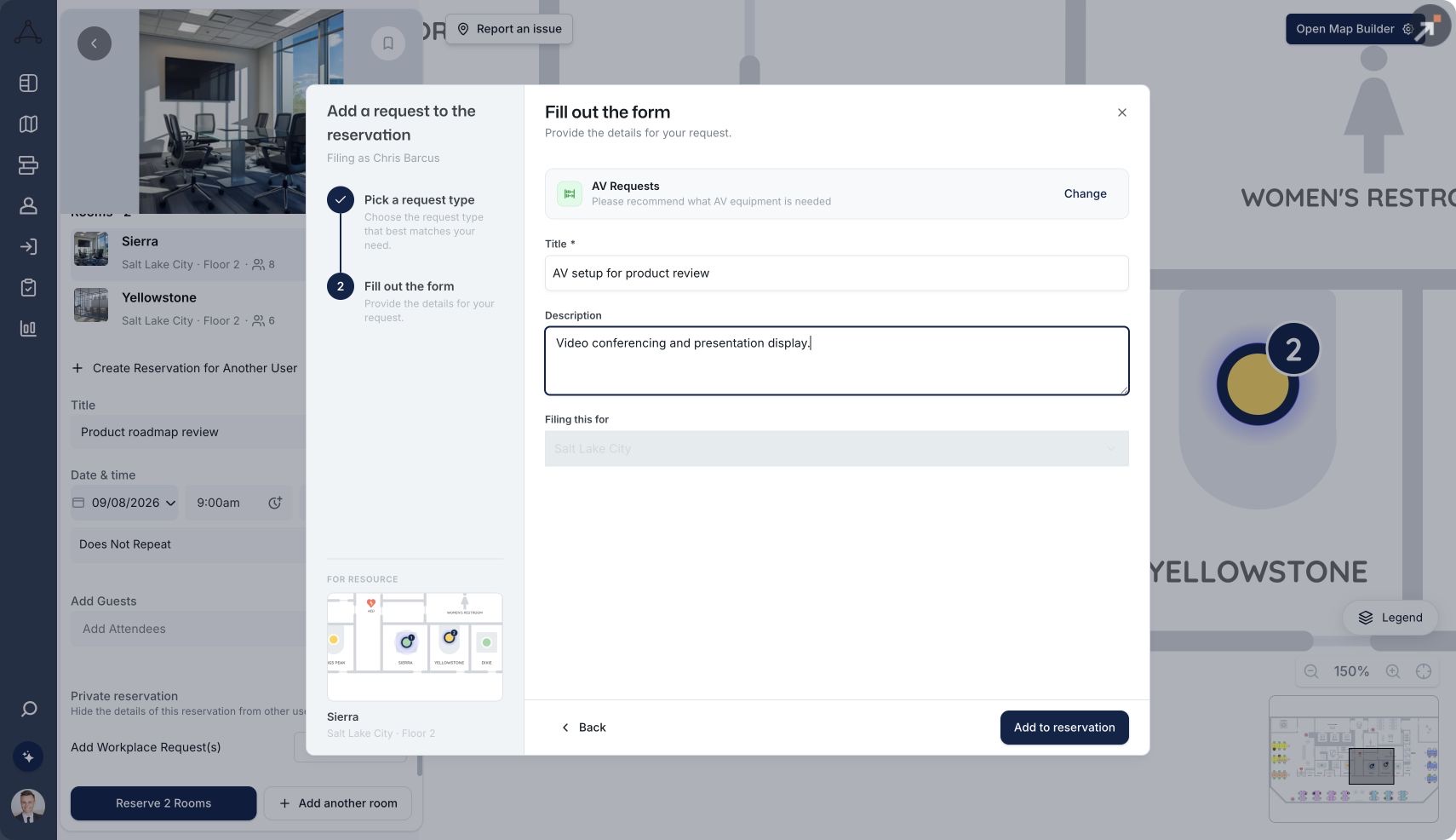
Keep requests connected to space

Give workplace teams a clear view of issues, owners, status, and the spaces involved.

Planning and analytics
Office demandLast 30 days
MTWTF
Wednesday peaks82% utilization

Use live data to guide decisions

Understand weekday demand and utilization patterns from the same system employees use.

Make the comparison count

The right platform.
For the way you work.

Comparing Tactic and OfficeRnD Workplace? Both support connected booking experiences. Evaluate the operational details: services, requests, seating, integrations, and the full cost of your workplace.

Why shortlist Tactic

Bring booking and operations together.

Keep people, spaces, and requests connected. Start with the products you need and let employees use Tactic inside Microsoft Teams.

Evaluate the fit

Compare workflow depth at your scale.

Use the same resource inventory, employee count, and integration requirements. Test a team booking, a service request, and a workplace change before choosing.

The buyer task

Complete the whole workplace journey inside Teams

Documentation-based comparison; competitor workflows have not been tested firsthand. The steps below are a reproducible evaluation protocol, not a timed benchmark.

  1. Fix the same desks, rooms, employee count, locations, calendar authority and provisioning requirements.
  2. Find a colleague and reserve a desk and meeting room through Teams.
  3. Request a meeting service or workplace fix, then change the reservation and inspect fulfillment and reporting.
  4. Move a team and validate directory lifecycle, user limits and visitor scope in the proposed plan.

Compare the completed task, exceptions, admin handoffs and data consistency in both products. Ask each vendor to demonstrate the result with your inputs. Use the same plan scope, roles, data and required integrations. Record setup work and exceptions, not just the successful path.

What mattersTacticOfficeRnD Workplace
Desk & resource bookingBook from a live map; manage desks, assigned seating, parking, and lockers. Explore →Lists desks, rooms, neighborhoods, and custom bookable resources.
Teams & employee accessUse the full Tactic interface inside Teams, plus Slack booking, reminders, and check-ins. Explore →Lists native Teams, Slack, Outlook, and Google Calendar connections.
Rooms & meeting servicesConnect Outlook and Google Calendar bidirectionally, book multiple rooms, and attach services to reservations. Explore →Professional includes workplace services and digital signage. Test your multi-room and service workflow.
Space & workplace operationsConnect seating, moves, utilization, and location-based workplace requests. Explore →Lists floor-plan editing, internal ticketing, and utilization reporting. Validate move requirements in a demo.
Identity & directory syncSupport SSO, SAML, SCIM, and directory integrations. Confirm your provider and provisioning needs. Explore →Professional includes provisioning; Enterprise lists multi-tenant SSO and SCIM.
Pricing & rolloutEstimate selected products using managed resources and locations. Confirm onboarding and integration scope. Explore →Resource-based pricing with separate room rates, minimum commitments, tier user limits, and Visitor Hub add-ons.

Sources and method. Maintained by Tactic · Last reviewed October 15, 2026. Accountable role: Tactic website content lead. This is a documentation-based comparison, not a firsthand competitor benchmark. The workflow is an evaluation protocol, and the Tactic images are product examples, not a completed side-by-side test. Product references: OfficeRnD Workplace plans / scope ↗; OfficeRnD Workplace reference 2 ↗; Tactic products and pricing; Tactic integrations. Confirm plan-specific availability and contract terms with each vendor. Licensed G2 report dates and sample counts below remain separate historical evidence.

Equivalent commercial scope

Compare one desk-booking deployment.

Same base inventory: 100 bookable desks, one location, 250 employees, 12 months, USD. This is a desk-only illustration, not a quote for the full workplace workflow above.

Annual base example · estimator checked October 15, 2026
ScopeTacticOfficeRnD Workplace
100 desks · 1 location · 12 months$3,600–$4,800 rough annual range from the live pricing estimator. Not a contractual quote.Quote required for this exact inventory and annual period. No equivalent verified quote is available here; no savings claim is made.
Excluded from this baseRooms, visitors, custom resources, requests, managed services and space/move products. Confirm identity, integrations, onboarding, floor-plan setup, support and taxes separately.Ask for the same scope rather than a differently bundled entry plan. Confirm included users/resources, minimums and all setup, hardware and service fees.
Full workflow quoteQuote the same selected products, resource inventory, locations, users, integrations, hardware, onboarding, support and renewal terms.Include resource rates, room rates, minimums, user limits, provisioning and the required Visitor Hub scope. Quote the same full workflow requirements, not the desk-only base alone.

Employee count is an evaluation input, not a promise of an unlimited-user contract. Final pricing and exact inclusion depend on the proposal. Where a public price is not equivalent to this deployment, request an equivalent quote from both vendors.

Product proof

What connected workplace operations look like.

See the workflows employees and workplace teams use to plan the week, reserve space, welcome visitors, and keep the office running.

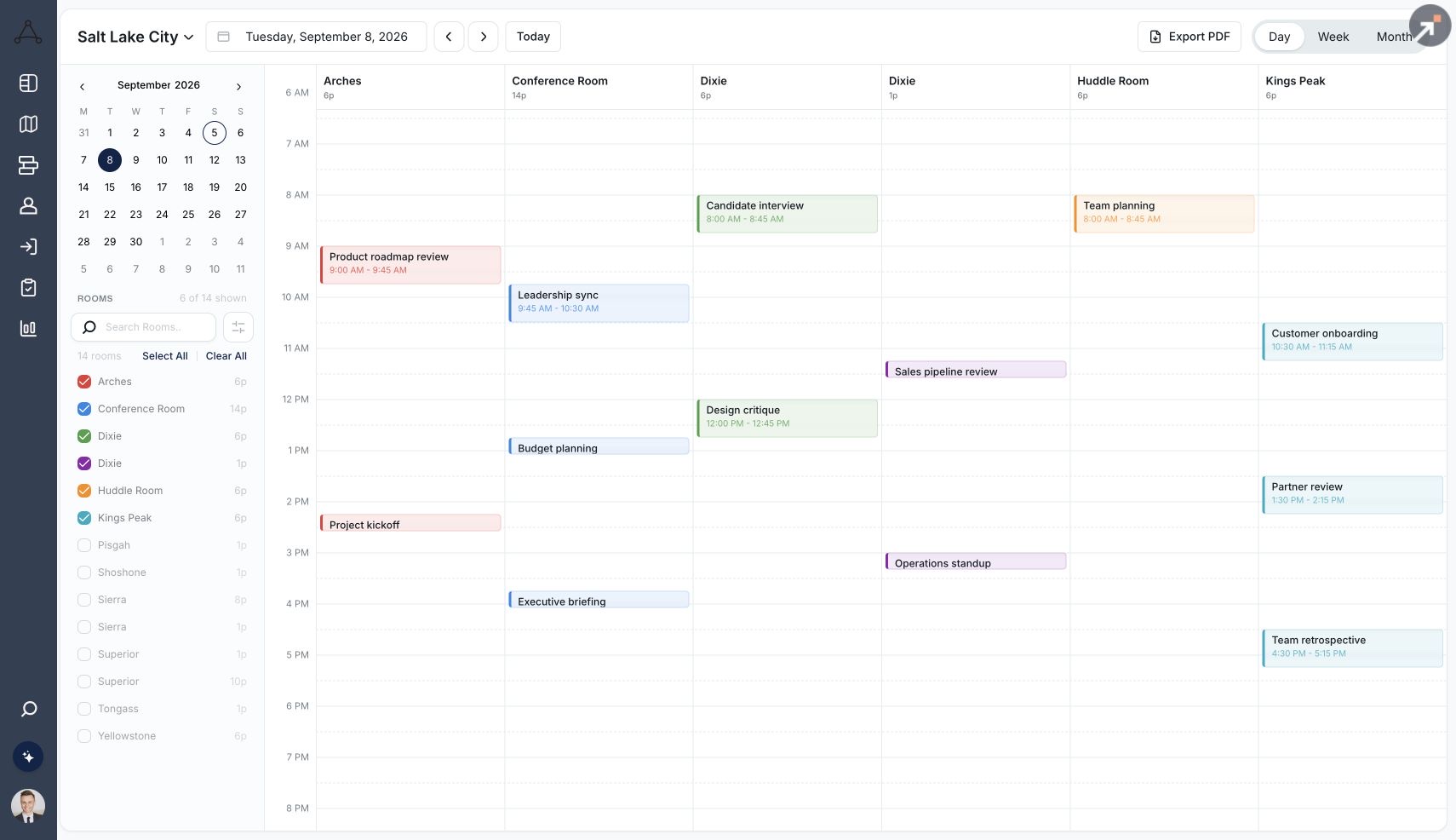
Tactic meeting room scheduling timeline
Room scheduling

Book rooms with less friction.

Keep availability, room details, and Outlook or Google Calendar connected.

Explore room booking →
From evaluation to everyday use

Make the next step. A clear one.

A good switch starts with a shared plan. Use these checkpoints to scope your move to Tactic before committing to a launch date.

01 · SCOPE

Map what matters.

Identify locations, products, floor plans, directory sources, booking rules, and the workflows you need to keep.

02 · VALIDATE

Test a real workday.

Pilot the map, Teams access, calendar synchronization, room services, and request routing with employees and admins.

03 · LAUNCH

Agree the handover.

Confirm data migration, future reservations, training, support ownership, and a cutover plan with your team.

These are evaluation checkpoints, not a fixed implementation timeline or a promise that every legacy record can be imported.

Record-level switching plan

Agree what transfers, what is rebuilt and who signs off.

Evaluation checklist, not a promise of a supported import
Records / workHandling to agreePilot acceptance check
People and identityExport the employee/team inventory and identify the authoritative directory. Confirm field mapping and provisioning before enabling users.One employee creation, team change and deactivation reconcile correctly in a pilot.
Floor plans and resourcesCollect approved plan files, desk/room inventories, amenities and stable identifiers. Agree what can be imported and what must be recreated.The pilot map matches the physical floor and every room maps to the correct resource calendar.
Assignments and booking rulesInventory assigned seats, neighborhoods, delegates, access rules and recurring policy exceptions. Configure and review the supported equivalents.Assigned and shared seating, booking limits and representative exceptions behave as intended.
Future reservations and recurring meetingsKeep a dated export and choose the system of record for each calendar. Confirm whether records can be transferred, retained in the calendar or must be rebooked.No duplicate bookings; edits, cancellations, recurring exceptions and time zones reconcile.
Historical utilization and service recordsExport the records your policy requires and retain a readable archive. Do not assume legacy analytics or ticket history can be imported.The archive is accessible and new reporting has a documented start date and consistent definitions.
Visitor records and integrationsScope host data, visitor policy, retention and permitted transfer. Plan the reconnection of calendars, identity, chat, panels and access systems.Approved sample flows work without duplicate invitations, stale access or broken notifications.
Cutover and rollbackName the owner of data, integrations, employee communication and support. Agree a freeze window, pilot sign-off, launch checks and rollback decision.Owners accept the cutover checklist and can restore the agreed fallback if checks fail.

Your workplace lead owns resource and seating sign-off; IT owns directory and calendar checks; the implementation lead coordinates the pilot, cutover and fallback; the service owner accepts request routing. Name the people in your rollout plan before setting a launch date. No universal migration timeline or automatic transfer of every record is promised.

Bring us the workflows you want to improve.

We’ll walk through how Tactic fits your workplace, identify the products and integrations you need, and scope your rollout.

Tactic vs OfficeRnD Workplace · FAQ

Questions worth asking. Before you choose.

Is Tactic an alternative to OfficeRnD Workplace?

Yes. Tactic brings booking, people, spaces, and workplace requests together. Use the same resource inventory, employee count, and integration requirements. Test a team booking, a service request, and a workplace change before choosing.

Is resource-based pricing unique to Tactic?

No. OfficeRnD Workplace also uses resource-based pricing. Compare your actual desk and room inventory, employee limits, selected products, integrations, onboarding, and support. The right comparison is the full scope and total cost, not simply whether a vendor charges per resource.

Can employees use Tactic inside Microsoft Teams?

Yes. The Tactic Teams app embeds the full Tactic interface inside Microsoft Teams. Tactic also supports Slack booking, reminders, and check-ins. Test the specific actions your employees need during your evaluation.

How should we compare Tactic and OfficeRnD Workplace pricing?

Use the same list of desks, rooms, locations, other resources, products, and integrations for both quotes. Confirm employee or usage limits, onboarding, hardware, support, add-ons, and renewal terms before comparing total cost.

What should we check before switching from OfficeRnD Workplace?

Review floor plans, seating assignments, employee directories, booking policies, future reservations, historical records, and calendar integrations. Agree what can be imported, what must be configured, and how the cutover will work. Do not assume every record transfers automatically.

How long will implementation take?

Timing depends on locations, data readiness, integrations, and internal approvals. Agree a project-specific plan with Tactic, including a pilot and ownership of training and support. Historical customer averages are not delivery commitments.


Tactic
Book a demoLog in